-
A Budding Trend
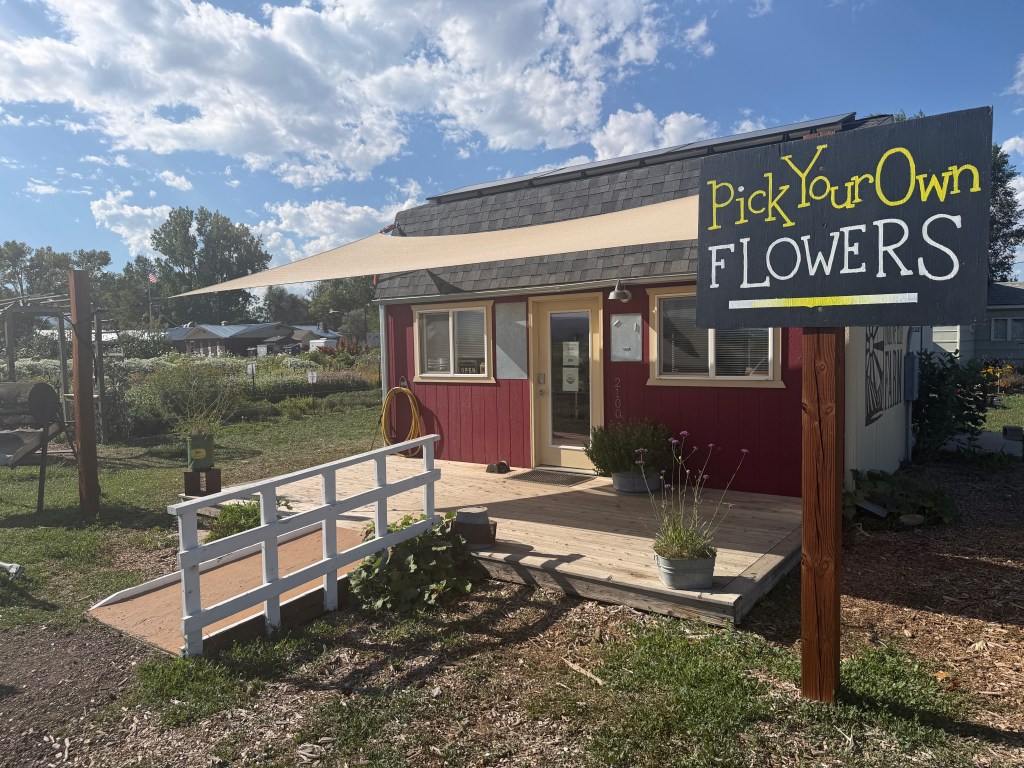
Last summer, an unexpectedly viral Instagram reel sent visitors from around the state streaming to Garden Sweet in Fort Collins. Rows of pink peonies and a flirty invitation to spend date night picking a $25 bouquet drove unprecedented traffic, eventually landing the farm a spot on 5280 Magazine’s list of the Front Range’s best u-pick flower spots.
That single moment of social media attention appears to have done more than boost one farm’s visibility — it may have helped fuel a regional trend for pick-your-own flower outings across Northern Colorado.
Staff at Garden Sweet and Native Hill Farm, another Fort Collins u-pick operation, say the appeal goes beyond the flowers themselves. Both Nadia Henry, a Garden Sweet team member, and Kelsey Gruber, a Native Hill Farm team member, pointed to the same underlying reason for the increased popularity: a growing desire among customers to feel connected to local agriculture.
Reasons to Pick
Both also credited social media with helping direct enthusiasm and participation, noting that much of the marketing they see and post themselves frames flower picking as a creative, social, and recreational opportunity — the kind of wholesome experience meant to be shared with a partner on date night, a group of friends, or family looking for an alternative to bowling or a movie.
The appeal may run deeper than a fun outing, too. A widely cited Rutgers University study found that receiving and spending time around flowers triggers genuine, immediate boosts in happiness, along with longer-term reductions in anxiety and improved life satisfaction, suggesting an afternoon spent picking blooms may offer real, measurable mood benefits beyond the bouquet itself.
The timing window is limited for those looking for a bloom boost: Native Hill Farm’s u-pick field runs through mid-July opening through first frost in September, while Garden Sweet’s u-pick season stretches roughly from June through October. Both farms recommend checking their websites or social media for exact hours before making the trip.
-
Unexpected Attention
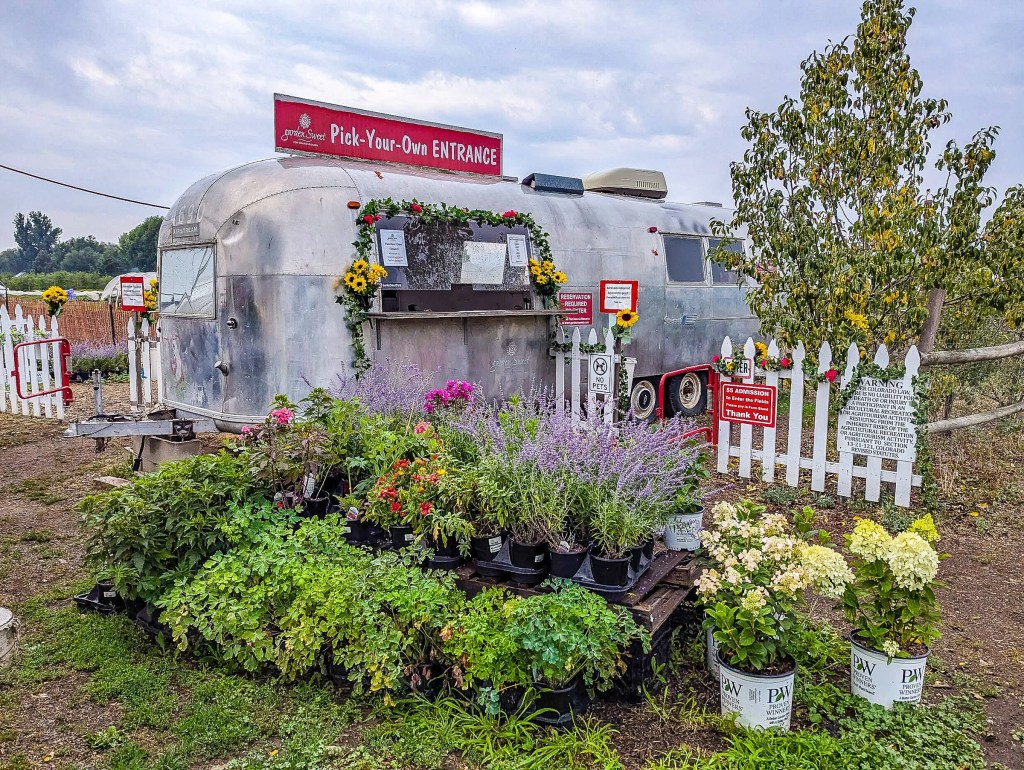
In June 2025, a single Instagram reel turned a small Fort Collins farm into one of Colorado’s most talked-about summer stops. Garden Sweet, a pick-your-own flower and berry farm saw a sharp jump in visitors after content creator Kate Zittergruen, who posts under the handle @katekeepswild, shared a video walking through the farm’s peony-picking experience and pricing.
The video showed the farm’s admission structure — $5 general entry, plus $20 for a bouquet-picking add-on — and quickly circulated across Colorado social accounts, drawing visitors from across the Front Range. Local radio station K99, which covers Northern Colorado news, was among the first outlets to pick up on the video’s reach, publishing a story on it within days of the reel going up and independently confirming the same pricing details shown in the clip.
Lasting Interest
More than a year after the original post, evidence suggests the farm’s viral moment translated into sustained, rather than fleeting, interest. Garden Sweet Farm was named one of eight favorite Front Range U-pick spots in a June 2026 roundup published by 5280 Magazine, and the farm’s online ticketing has since expanded beyond the original bouquet cup to include a $60 “Flower Bucket” option — a sign of sustained enough demand to justify a new price tier.
The farm itself continues to post actively about picking season on its own channels, suggesting it has leaned into, rather than away from, the attention the original video brought.
Posts like these indicate the farm has kept promoting its pick-your-own model well beyond the original viral window, rather than treating last year’s surge as a one-time event.
How to Verify and Measure Impact?
The pricing and hours referenced across these posts were cross-checked against Garden Sweet Farm’s official ticketing platform, which lists current admission and add-on pricing. The farm’s inclusion on 5280’s list was confirmed directly on the magazine’s website. K99’s original coverage independently verified the same pricing shown in Zittergruen’s video, offering a second source beyond the video itself. The Facebook post above was located by browsing the farm’s official page directly, rather than through search.
Whether the sustained attention has meaningfully changed the farm’s sales, staffing or social media strategy since the original video — as opposed to simply continuing to draw curious visitors — has not yet been independently confirmed. Reaching Zittergruen and/or Kafka directly for comment is the next step planned to confirm or further verify these details.
-
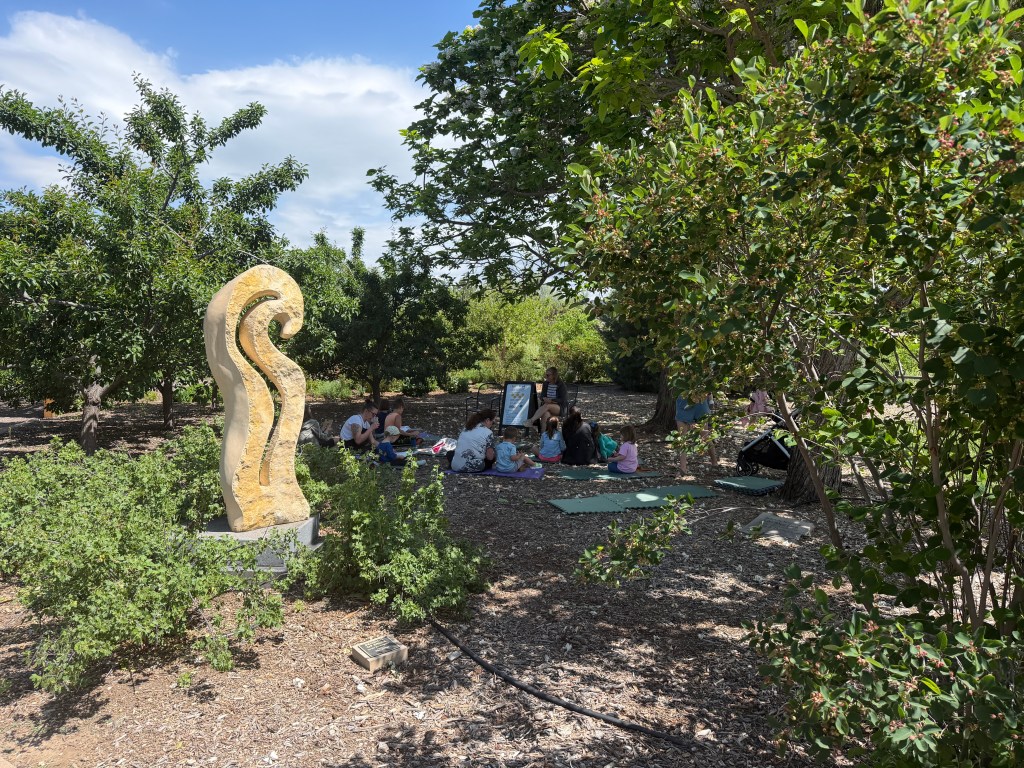
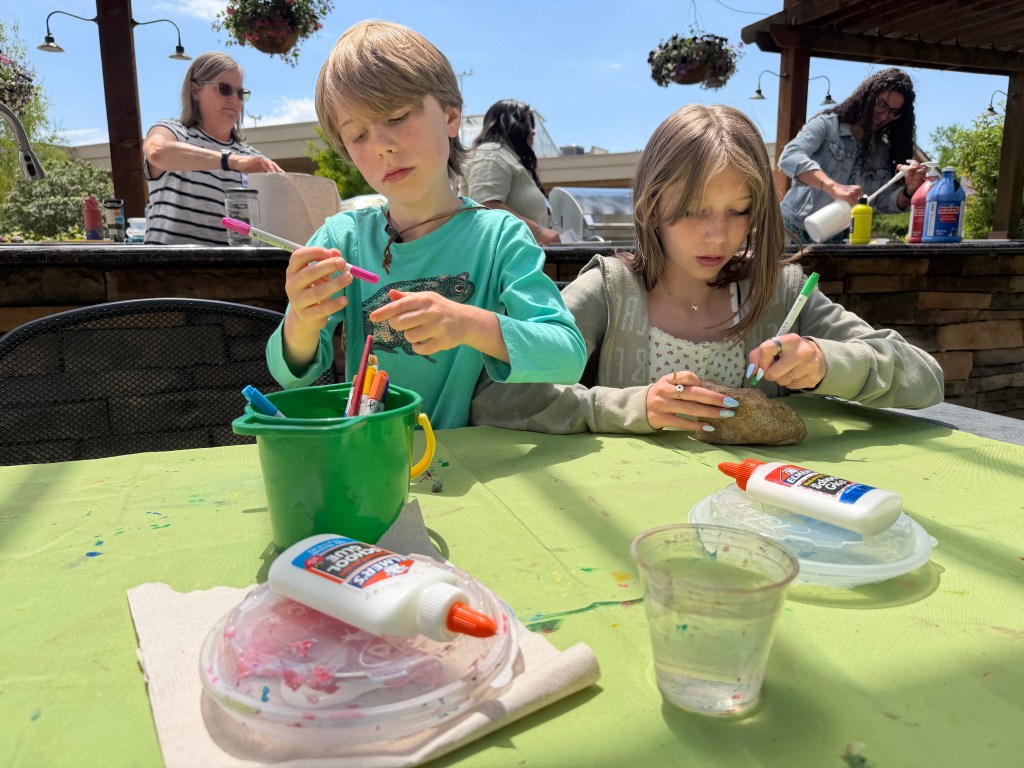
With Poudre School District officially out for the summer, a handful of Fort Collins families made their way to one of the town’s best-kept secrets — the Gardens on Spring Creek — where the beloved Read and Seed program kicked off its summer season today.
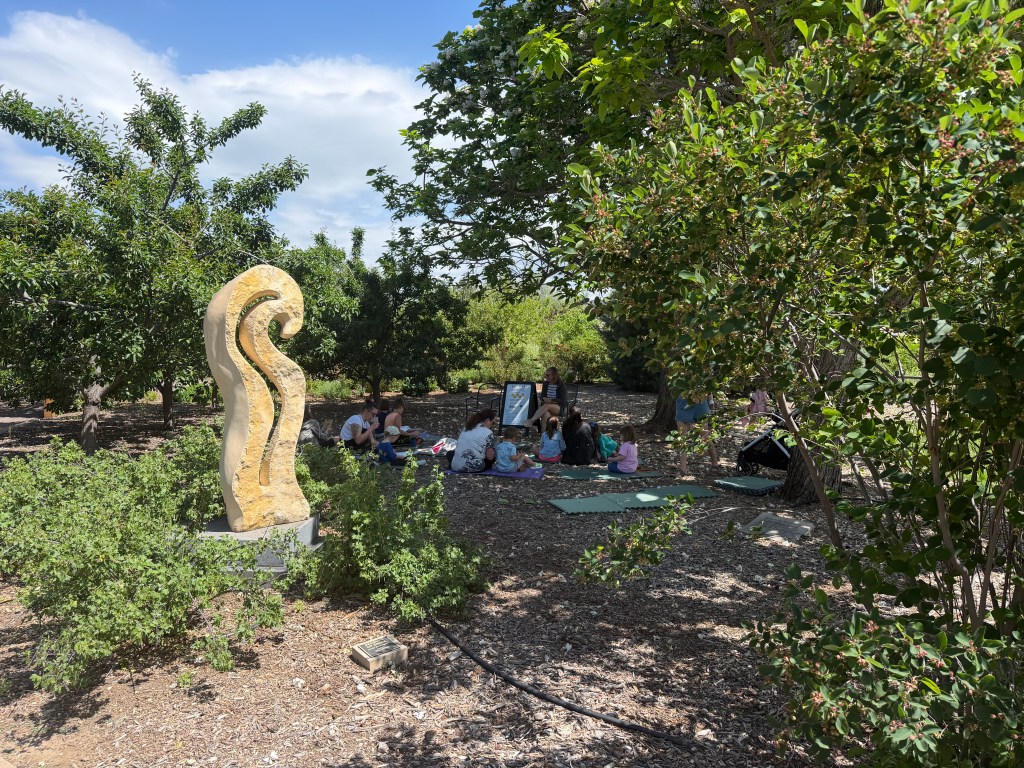
The program, one of the longest-running at the Gardens, welcomes toddlers, preschoolers, and their caregivers for 45-minute sessions on Monday and Tuesday mornings. Each session follows a familiar rhythm — a welcome song and story tied to the day’s theme under the shade of a catalpa tree, a guided nature walk through the gardens to hunt for colors, creatures, or seasonal blooms, and a hands-on craft to take home under the arbor of the outdoor kitchen.
This week’s theme is pet rocks. Children used their imaginations to find shapes in stones, spotting bunnies, birds, and other creatures hiding in the granite before transforming them into nature-inspired creations to take home. It’s a tidy blend of early literacy, outdoor exploration, and school-readiness skills, woven naturally into the Gardens’ grounds.
“We often have families that just come in the summer, but we do have quite a few families that will be here the entire year — it’s really awesome to see them progress in their growth,” said Britt Mowen, the Gardens’ Youth Programs Coordinator. “Seeding a love of nature in our participants — that’s our main goal.”
While the program is designed for children ages two to five, older siblings are always welcome. Twelve-year-old Coco Fairburn, who attended this week alongside her younger brother, said she enjoyed that the activities were interactive and that the participants were encouraged to move through the gardens independently as they searched for just the right pet rocks.
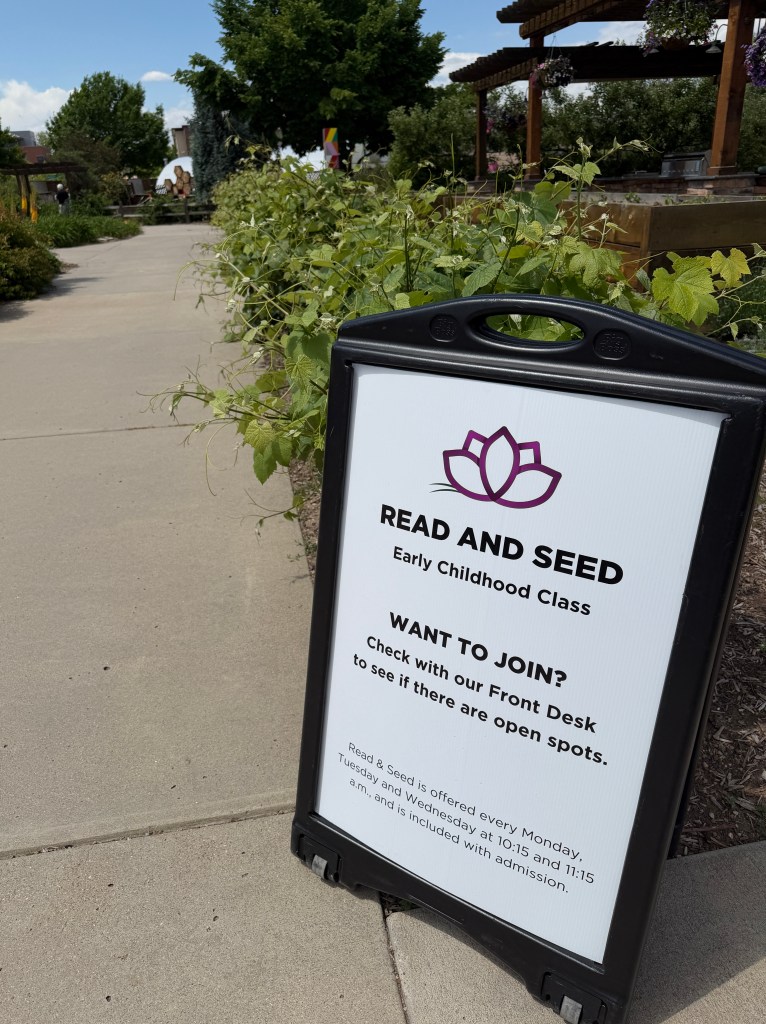
Read and Seed runs year-round, with sessions at 10:15 a.m. and 11:15 a.m. Scholarships are available for families in need. For more information, visit the Gardens on Spring Creek website or follow them on social media.
-
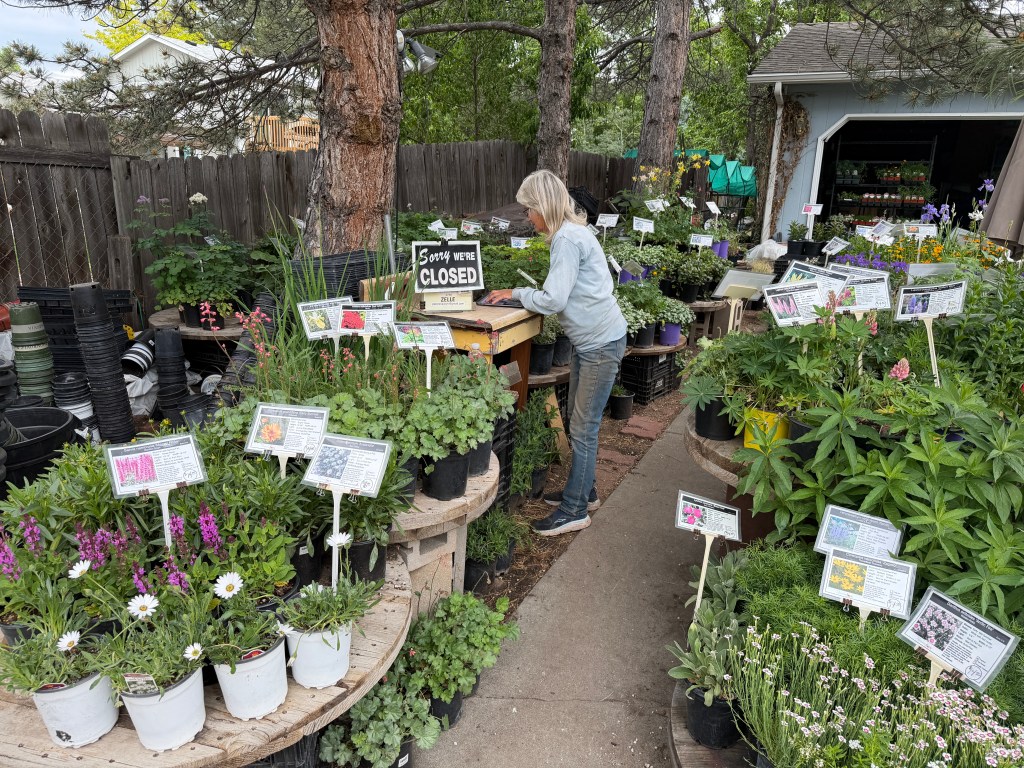
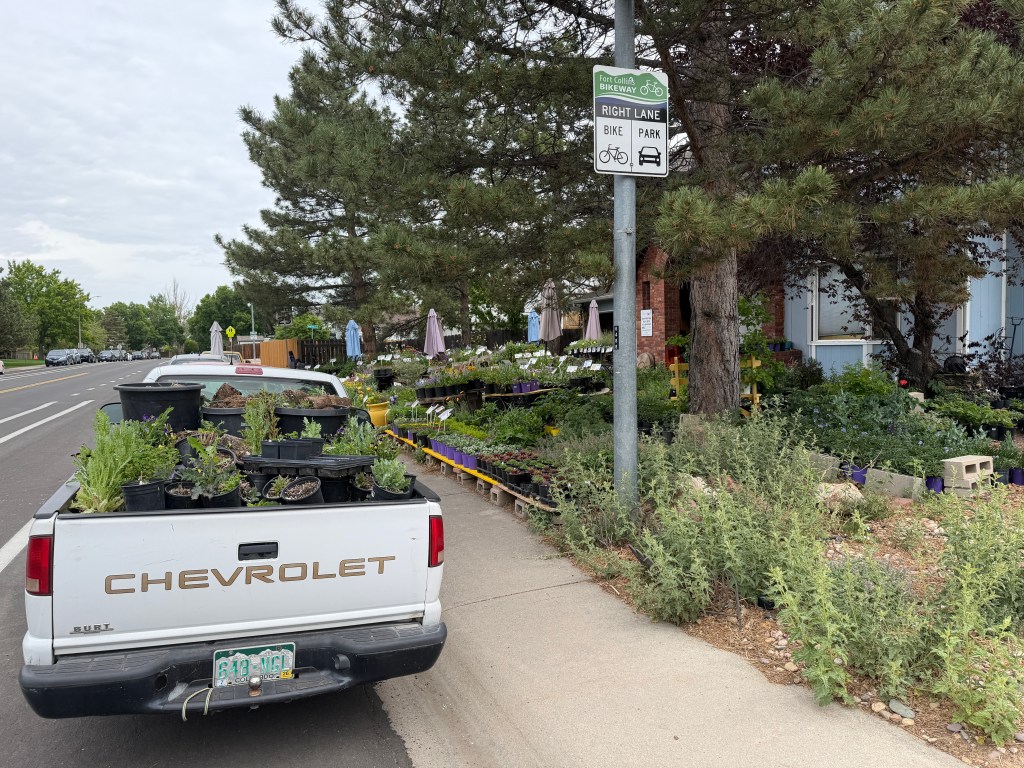
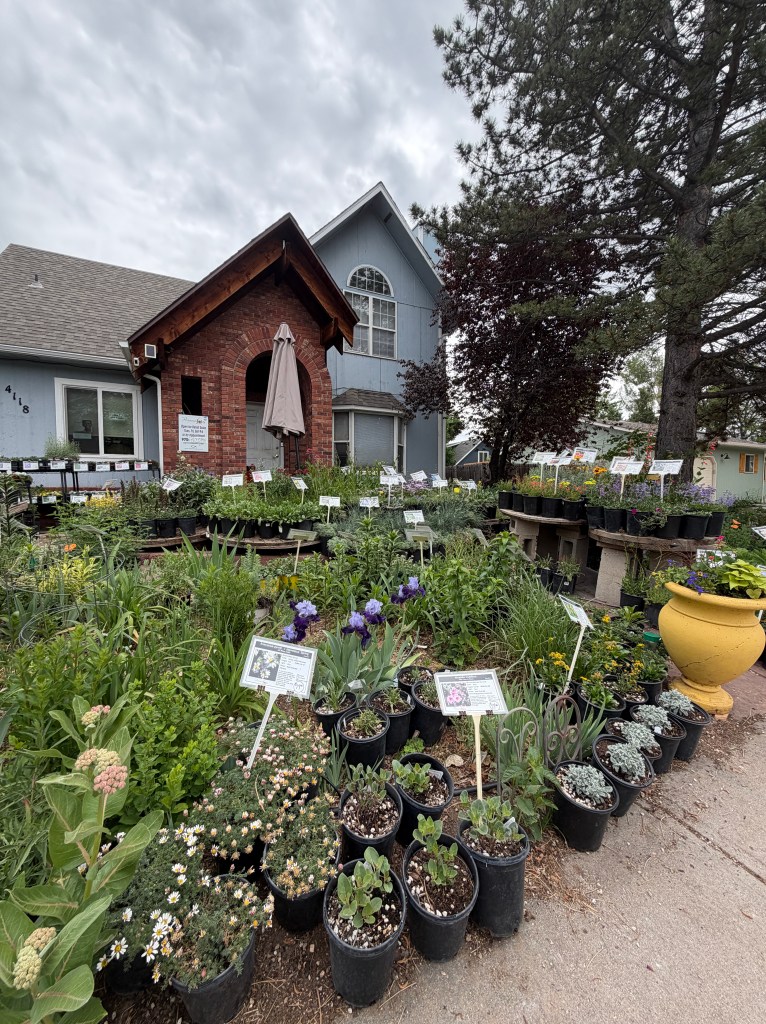
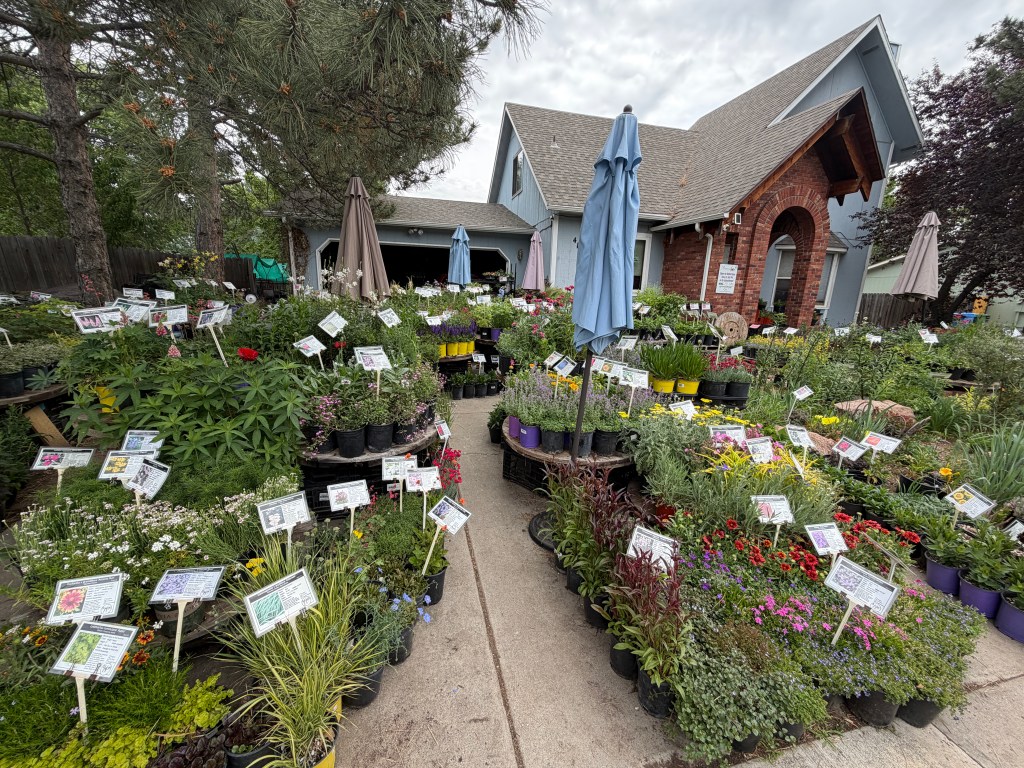
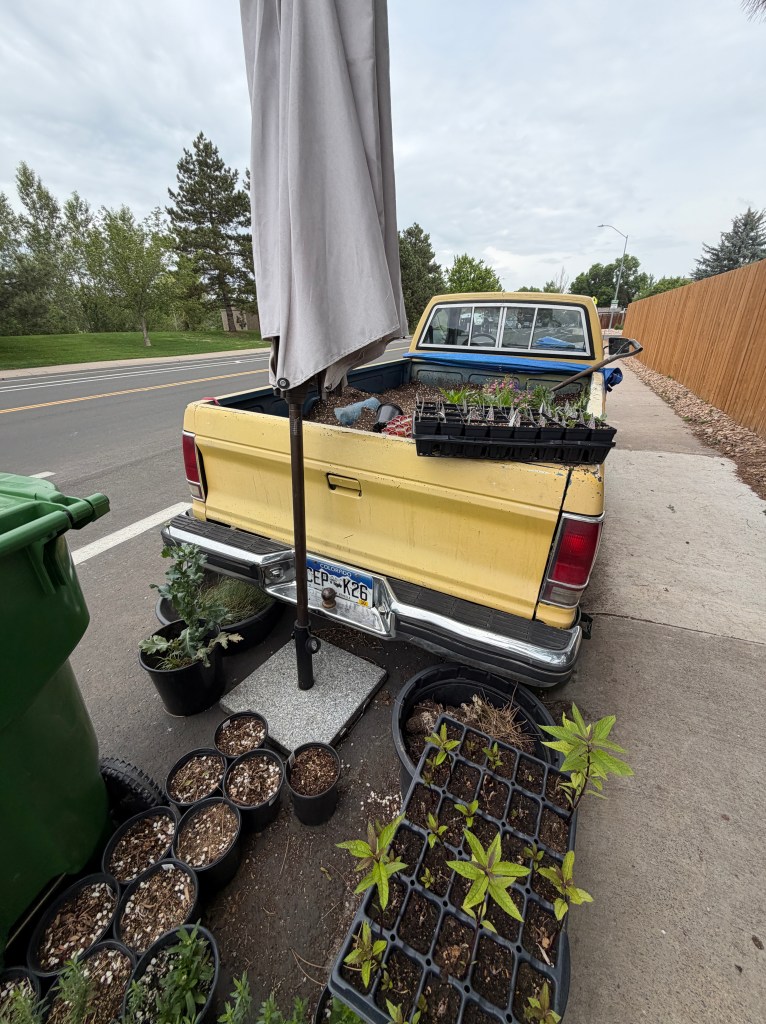
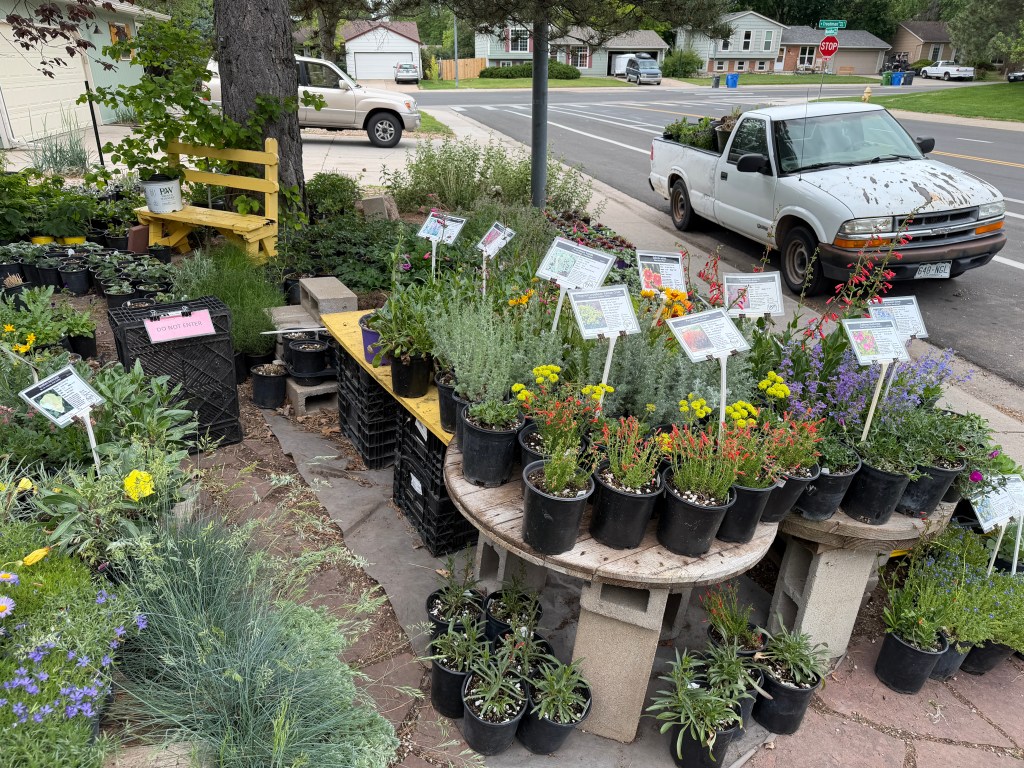
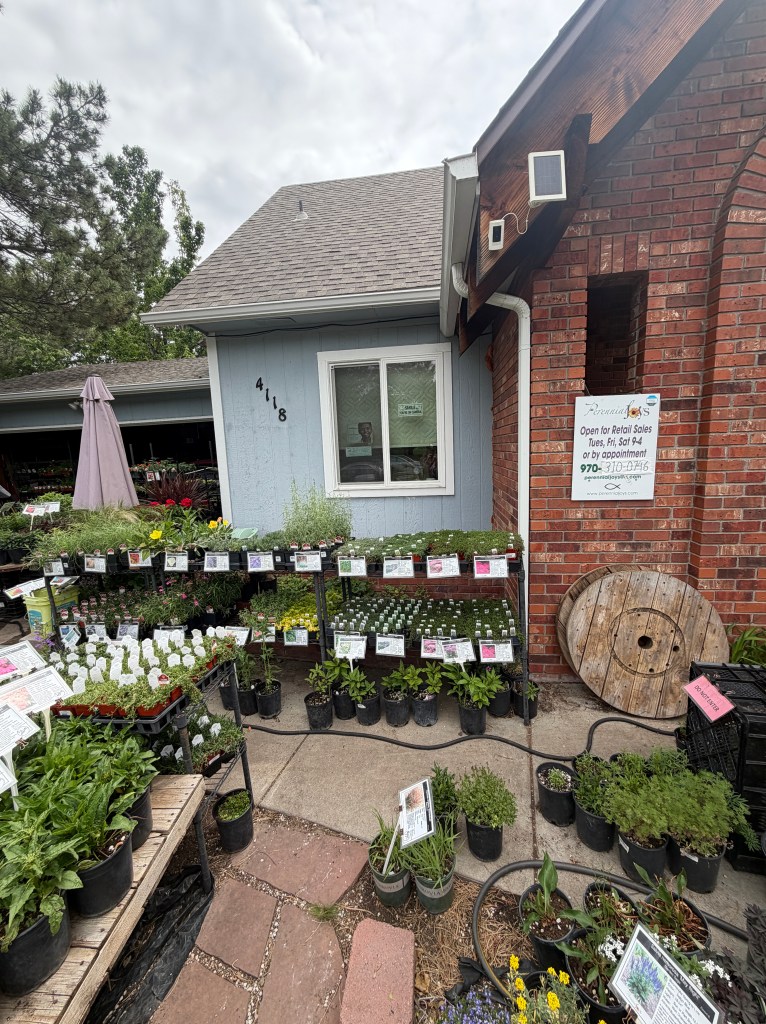
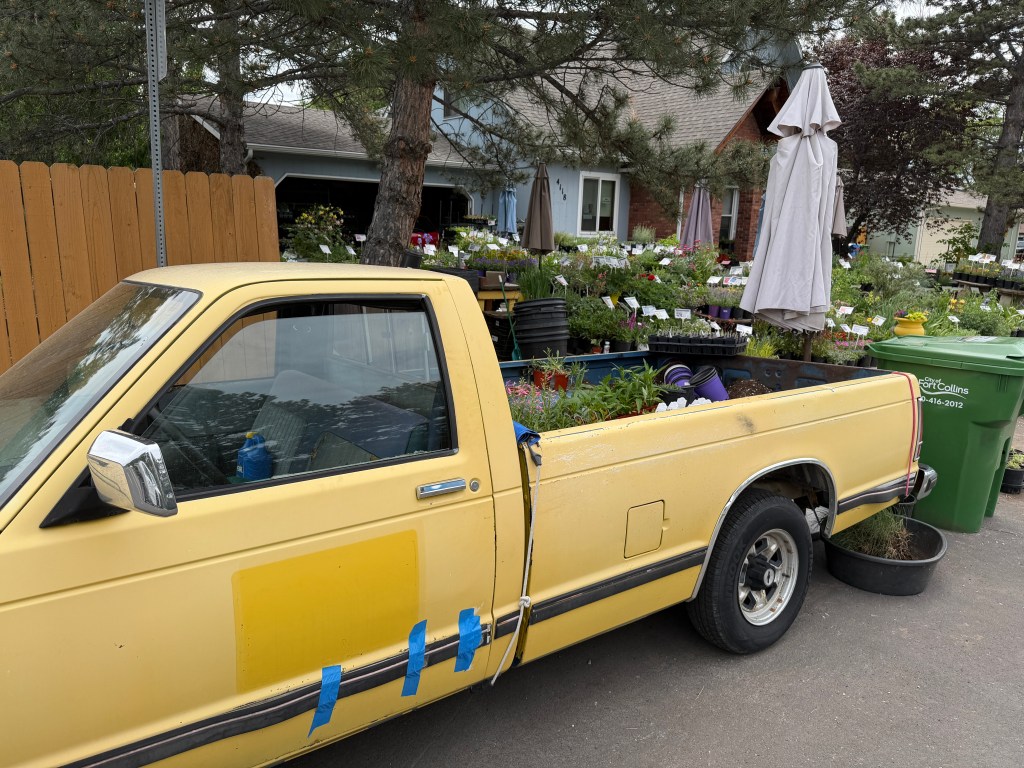
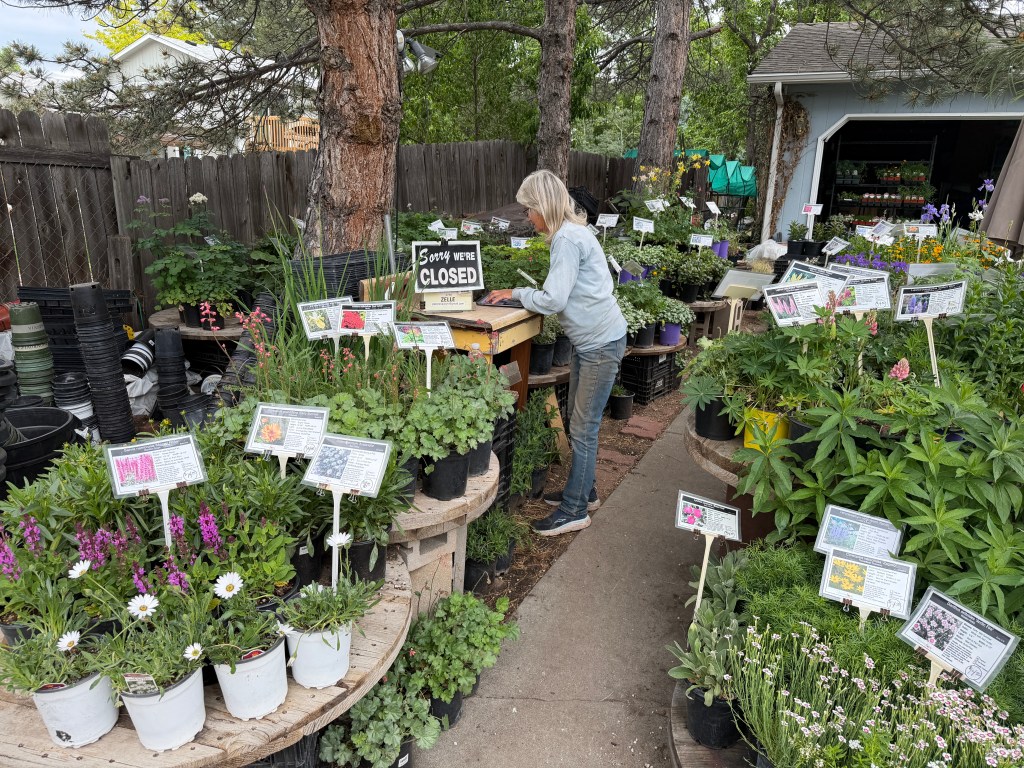
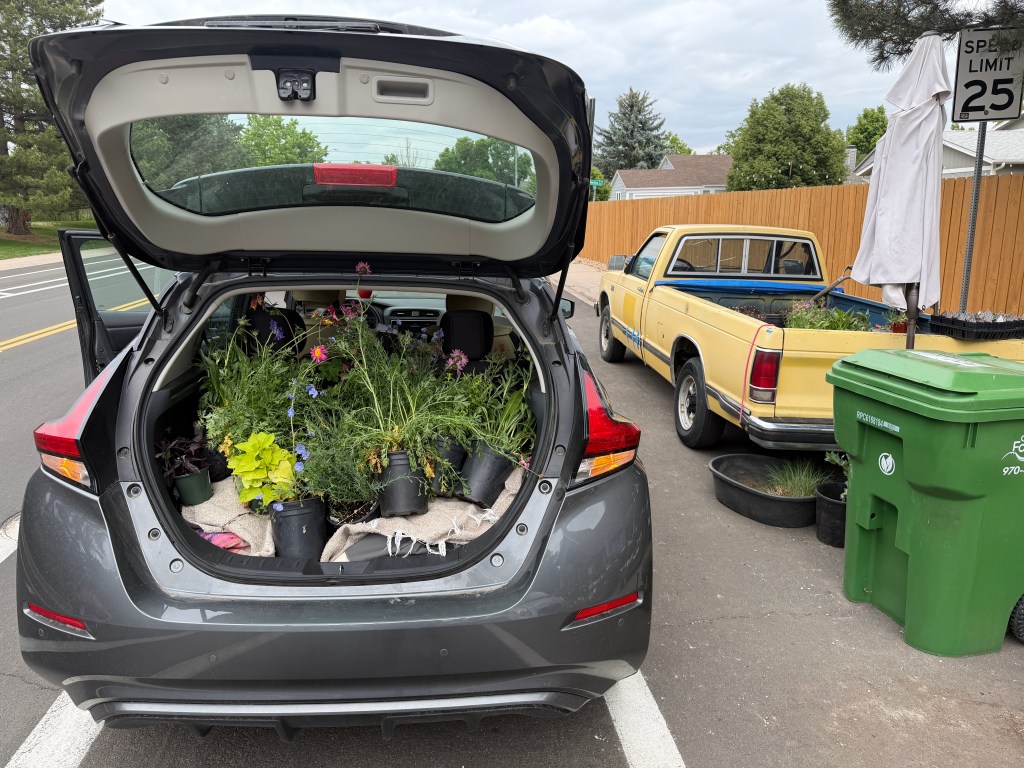
Joy Andrews’ front yard garden center isn’t technically open for retail business today. Wednesdays are reserved for wholesale accounts and catching up on maintenance. But like the butterflies and bumblebees, people can’t resist stopping by to take in the riot of blooms. And Joy can’t resist breaking from her work and schedule to let them.
She chats about this plant and that, about the weather — and ends up making a few sales. It’s hard to turn anyone away once they’re there, under the seduction of so much color and delight.Offering beauty and happiness one plant at a time is her business model and her mission.
Joy started her namesake Fort Collins, Colorado nursery, Perennial Joys, twenty years ago this summer. What began as a hobby — replacing a little of her front yard’s grass with flowering plants, little by little each season — has grown into one of the town’s most unique and treasured sources for quality, regionally adapted garden plants.
Despite being well established as a local legend, it hasn’t always been a rosy path for Joy. Over two decades of growing and selling more than 700 varieties of plants from her home, she’s navigated city zoning battles, brutal winters, loss, injury, and the relentless physical demands of a one-woman operation. Urban agriculture enterprises like Joy’s are increasingly rare. According to the latest USDA data, the U.S. lost nearly 15,000 farms in 2024, with the sharpest declines among smaller operations — squeezed by zoning complexity, rising water costs, and the physical toll of going it almost entirely alone.
But Joy has persevered, and at nearly eighty years old, she plans to continue for a few more seasons. Plants make her happy. They made her mother — who helped her at the nursery until she was over 100 — happy. They make her neighbors and customers happy. A woman browsing on this Wednesday mentions she didn’t feel well, so she decided to come by. Joy understands. She knows firsthand what science is now confirming — that horticultural therapy has a measurably positive effect on mental health, with studies linking time among plants to reduced stress, improved mood, and a stronger sense of well-being.
Joy works seven days a week, handling every aspect of her business on her own. When asked what her favorite flower is, she says anything that’s blooming. You can visit Joy and all that’s blooming at Perennial Joys — Tuesdays, Fridays, and Saturdays, 9am to 4pm.
All photos by Lauren Morgan
-
Growing West: Water, Land, and What Comes Next for Pedaling Petals
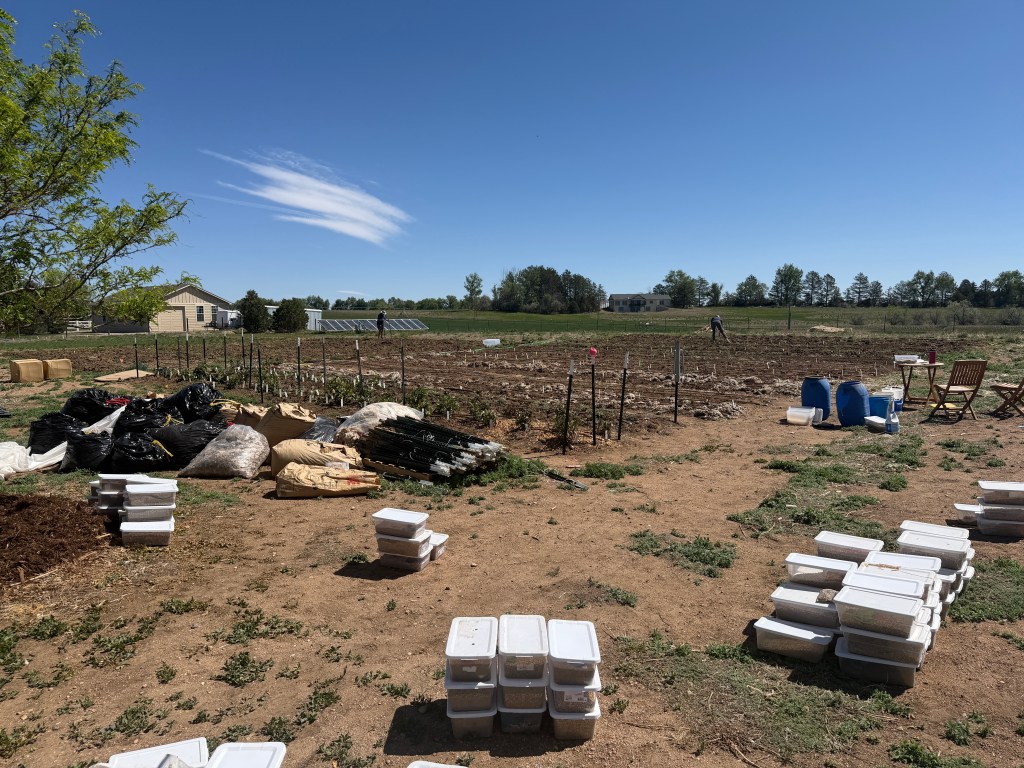
Outside her front door and facing the foothills of the Rockies, Heather Hirschi adjusts drip irrigation lines while Tim Diana, her growing partner, broadforks soil in preparation for planting dahlia tubers. The two have been growing flowers together for two years under the Pedaling Petals name — a partnership rooted in friendship, a shared love of specialty dahlias, and a mission that began long before either of them called it a business.
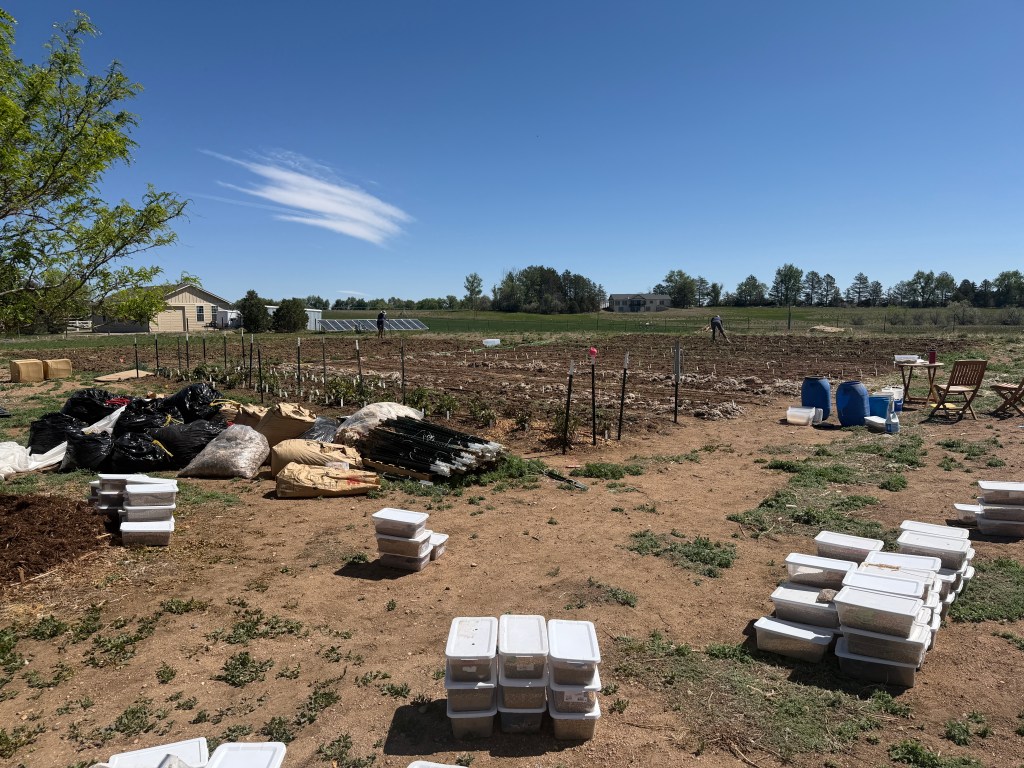
Spring preparations in the field. Photo and caption by Lauren Morgan Tim started growing flowers in 2021, delivering bouquets by solar-powered e-bike to local medical centers after seeing firsthand how much flowers could lift someone’s spirits. The deliveries never stopped. Pedaling Petals now donates roughly 3,000 flowers per season to Columbine Health residents, twice a week, by bike. The farm’s stated mission extends beyond the bouquet: making the world better one flower at a time, the operation is built around sustainability — caring for communities, soil health, and plant and insect biodiversity as core values.
This season, however, the conversation keeps returning to water — one of the most pressing conservation and sustainability challenges facing northern Colorado’s agricultural community.
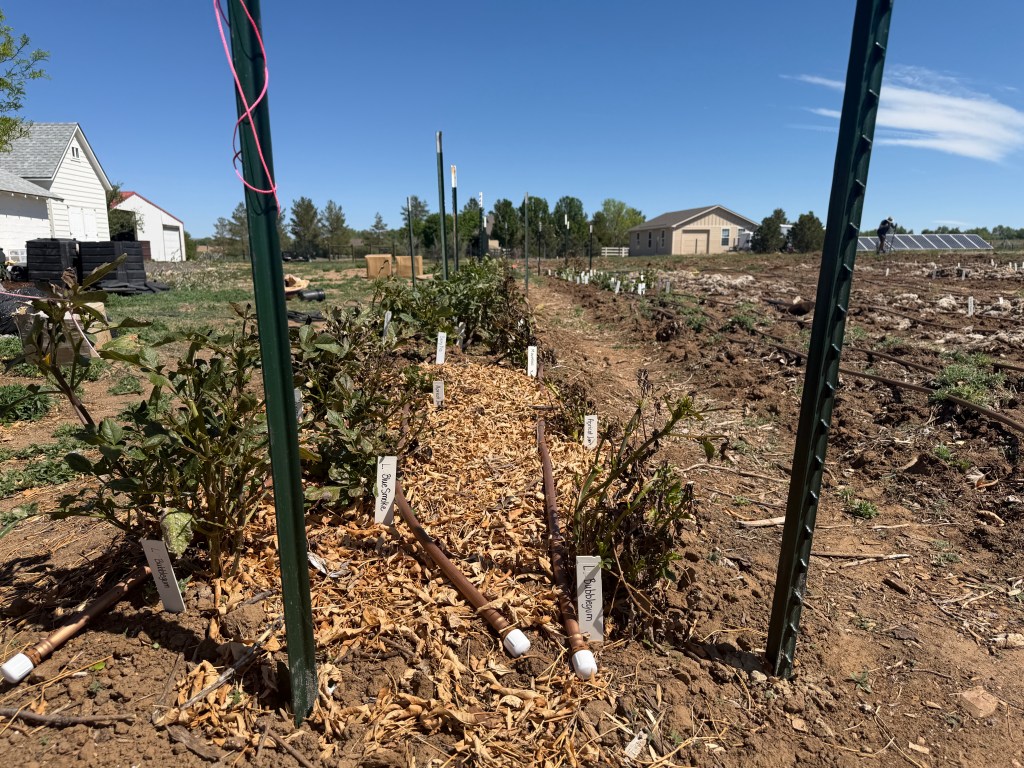
Colorado’s drought has reached historic levels, with snowpack at just 26% of median and Front Range water allocations cut to 50% or less of normal. Research in Frontiers in Plant Science confirms what growers already know — drought shortens stems, reduces flowering, and cuts commercial value significantly. A farmer Tim spoke with recently received five days of ditch water this season where he normally receives 68.
For now, Tim and Heather are fortunate. Their current property has a natural spring — unrestricted, seasonal, and increasingly rare. But the property is changing hands and the search for new land is underway. “We are keenly aware that every drop of water that we use, someone else down the river doesn’t,” Tim said.
Their criteria for what comes next is clear. Location and water. In that order. Everything else follows.
For Pedaling Petals, finding the right next field is not just a business decision. It is the one that determines the future of the operation and its mission.
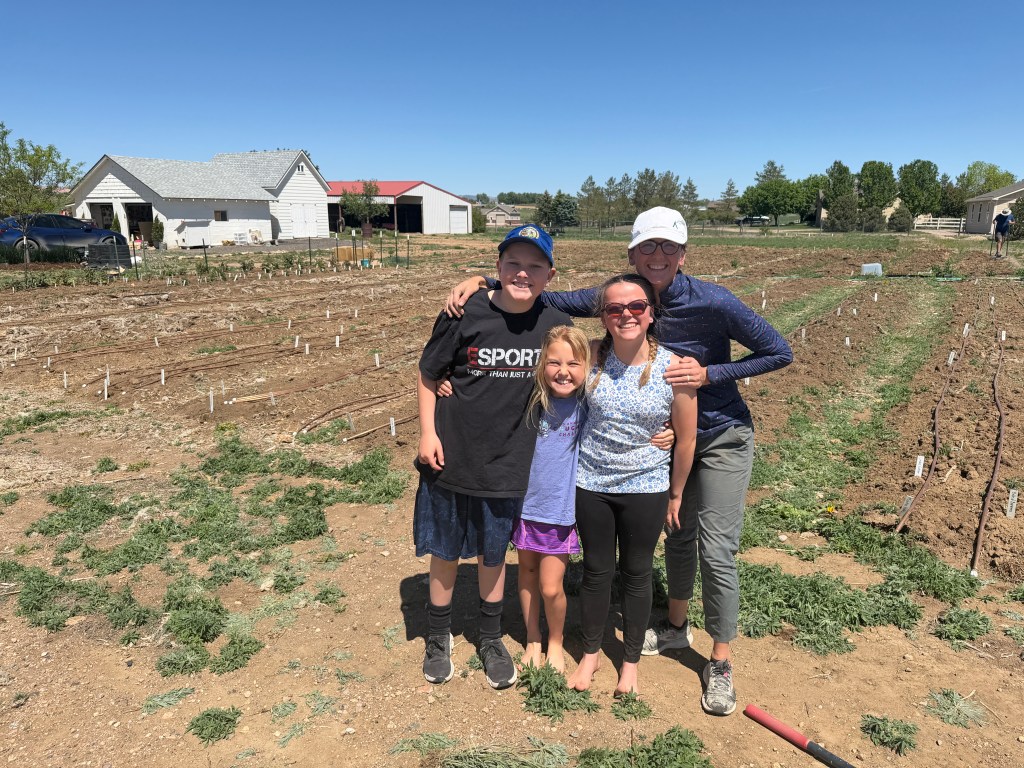
Heather and helpers. Photo and caption by Lauren Morgan -
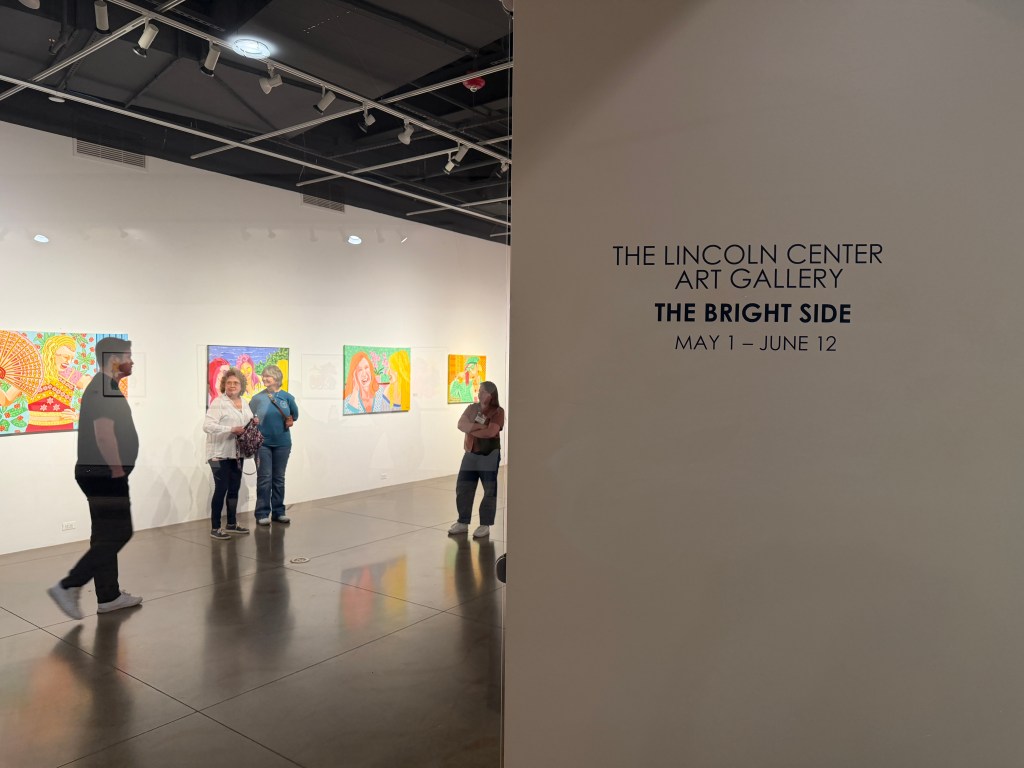
On the evening of May 8, the Lincoln Center Gallery in Fort Collins hosted the opening reception for The Bright Side, an exhibit celebrating the power of bright color and uplifting energy through a dynamic mix of artistic styles. Among the four featured artists was Tricia Soderberg — a Colorado based mixed media artist whose abstract botanical prints and collages explore the cycle of cultivation and transformation. This profile is the latest in an ongoing series on northern Colorado’s botanical artists.
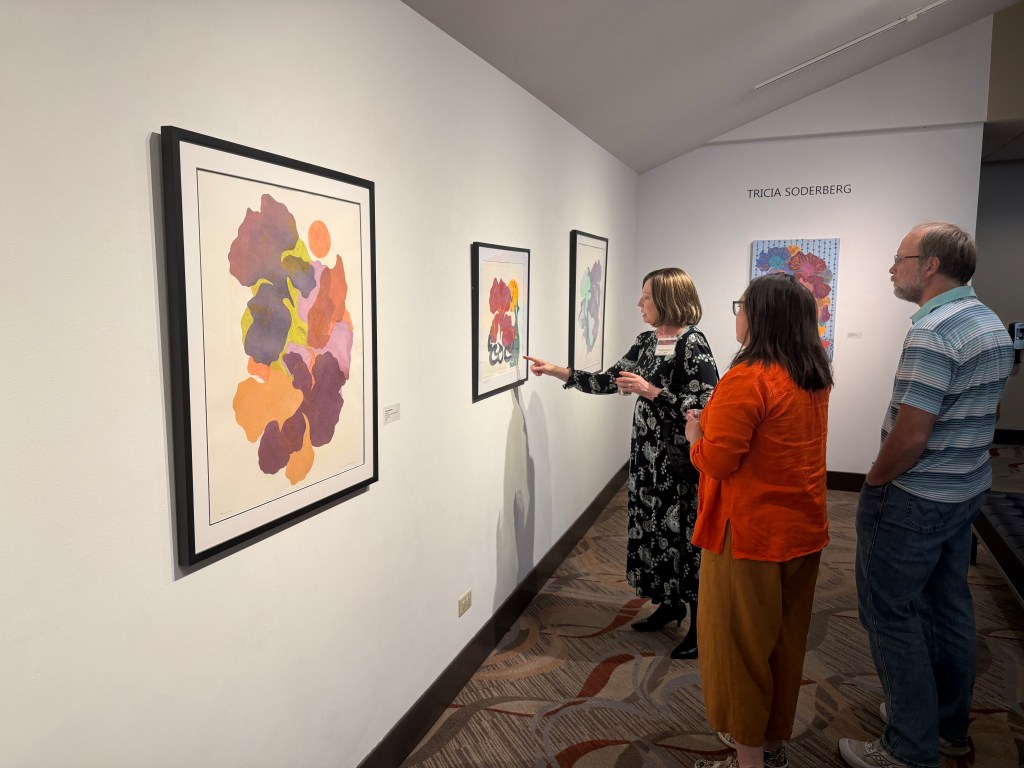
Soderberg did not start with abstraction. Her early work was rooted in traditional landscape painting featuring wide vistas and recognizable terrain. But as she moved into printmaking, her attention shifted. Drawn to the flat shapes and deliberate negative space of Japanese printmakers, she began looking closer into the landscape rather than across it. The result was a body of work that isolates botanical species — eucalyptus, peonies, aspens — and strips them down to their essential geometry. The works in The Bright Side center entirely on the iris, grown in her own backyard.
Soderberg’s studio process is as intuitive as the work looks. She inks botanical shapes, arranges them in intentionally random compositions, and runs them through the press. Sheets are sometimes pressed together — a sandwich technique that yields unexpected results she then responds to. Decorative paper forms the collage foundation, layered with metallic paint to echo and extend the tonal relationships already present.
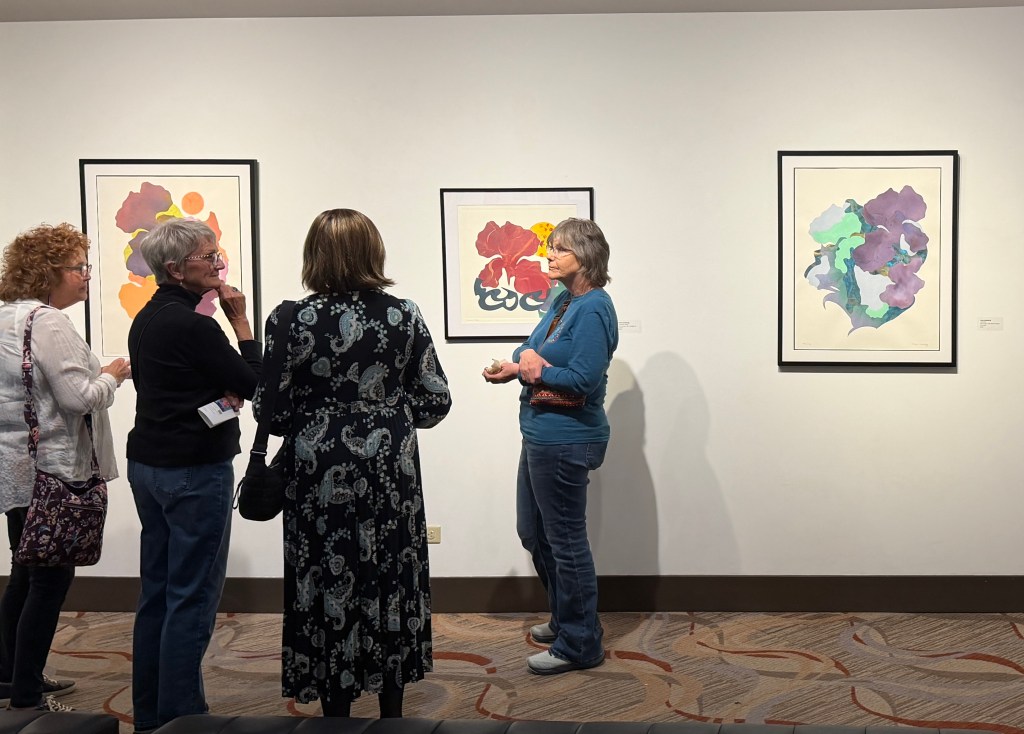
What emerges, viewers keep telling her, is joy. “I’ve been accused lately that my work is very joyful,” Soderberg said with a laugh. “I’m at a point in my life where I feel very free — and I think that freedom is showing through in my work.” It is a response that aligns with recent research showing that botanical imagery — even abstracted and painted — produces measurable positive emotional responses in viewers.
Next up for Soderberg: a new series built around the clematis growing in her home garden. The Bright Side runs through June 12 at the Lincoln Center Gallery, Wednesdays and Fridays, 1–6 pm, free admission.
Tricia Soderberg is based in Colorado Springs, Colorado. See her full portfolio at triciasoderberg.com and @triciasoderbergart
-
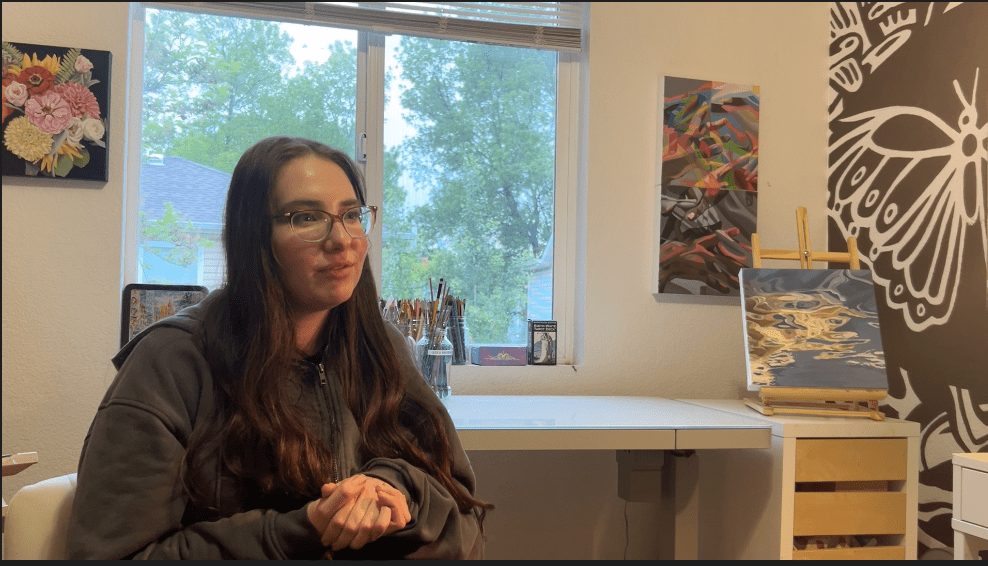
Annika Lahr spends a lot of time looking at flowers. As a Fort Collins-based floral designer and botanically inspired painter, that attention is both professional habit and artistic practice.
Lahr’s relationship with flowers began as a conceptual one — her academic paintings explored floral imagery as a lens for examining femininity, gender identity and power. That foundation has since given way to a more intimate, documentation-driven practice: detailed paintings of bridal bouquets, floral preservation work, and a new career as a floral designer at Fort Collins’ Joyful Poppy.
A mini-documentary interview with Lahr opens an ongoing series profiling the botanical artists of Northern Colorado, a region whose high desert landscape and thriving arts community have made it fertile ground for this genre of artistic expression.
The perception of botanical painting as decorative or minor has shifted considerably. Scholar Irina Neacșu’s 2022 study on contemporary botanical art documents its resurgence as a serious fine art medium — something Lahr, who encountered that bias early in her practice, has experienced firsthand.
Lahr was initially discouraged from using flowers as subjects. “I was always told that painting florals was not advanced, but was cliche,” she said.
There is also growing evidence that the practice itself is good for the practitioner. A 2025 review in Frontiers in Psychology found that nature-based creative practice produces measurable reductions in anxiety and depression — a dimension of the work that will run as a throughline across this series. For Lahr, this connection to the healing dimension of art runs deep — her grandmother, an art therapist, introduced her to painting as a child.
For Northern Colorado residents drawn to the art form, resources are close at hand. The Gardens on Spring Creek offers botanical art programming for all skill levels, and the Rocky Mountain Botanical Artist Society connects regional artists with the broader Front Range community and beyond.
Annika Lahr is based in Fort Collins, Colorado. See her full portfolio at annikamarieart.com.
-
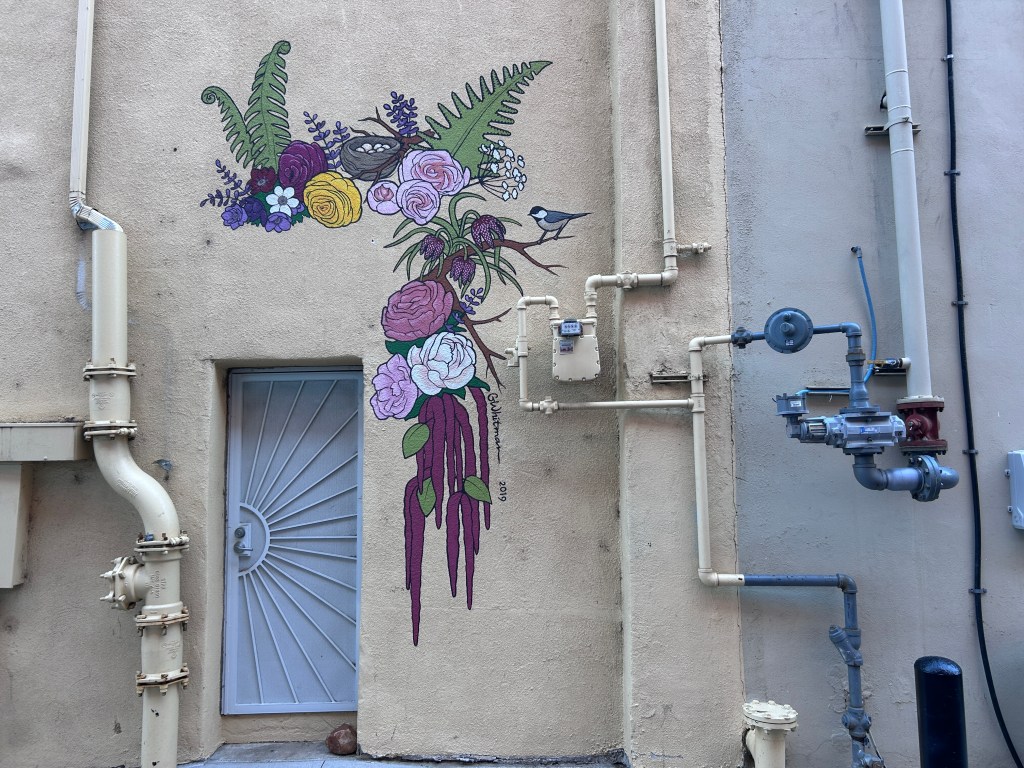
It’s still too early in northern Colorado to plant many of summer’s most popular and eye-catching annual flowers. The bold seasonal color that defines Old Town Fort Collins’ street corners each year is still weeks away. But in the meantime, the Lincoln Center Art Gallery is offering an alternative dose of floral therapy. The Bright Side, a new exhibit featuring Colorado artists Annie O’Brien Gonzales, Laura Merage, Tricia Soderberg, and Randy Steinke, opened May 1 and runs through June 12, with a free opening reception this Friday, May 8.
Liz Good, the city’s visual arts coordinator, says the exhibit is a great opportunity to be surrounded by color. ‘It should be a little bit of a pick-me-up,’ Good said. “We try to pick art that is visually stimulating, exciting, happy and bright.”
The Bright Side brings together artists working across a range of styles — with much of the work rooted in floral themes and subjects. Interactive installation, abstract work, and portraiture are all united by a shared commitment to bold color and uplifting energy. The result is a collection designed to move viewers emotionally, offering an immersive experience centered on positivity and joy.
In addition to the gallery, Good’s office oversees the city’s Art in Public Places projects — including the city wall and transformer cabinet mural programs. Whether painted in vivid realism or sweeping abstraction, floral imagery runs throughout the city’s mural collection. The result is year-round botanical and nature-inspired color woven into the fabric of daily life across downtown Fort Collins.
That intersection of botanical imagery, public space, and community wellbeing is drawing growing attention from researchers. A 2025 study in Frontiers in Human Neuroscience found that viewed flowers — whether real or painted — produce strong, measurable emotional responses, suggesting that a painted bloom may move us much the same way a real one does.
The Bright Side opening reception is this Friday, May 8, at the Lincoln Center Gallery, 417 W. Magnolia. Free and open to the public. Gallery hours are Wednesdays and Fridays, 1–6 pm. Information and maps for the downtown wall and transformer cabinet murals are available at www.fortcollins.gov/publicart.
-
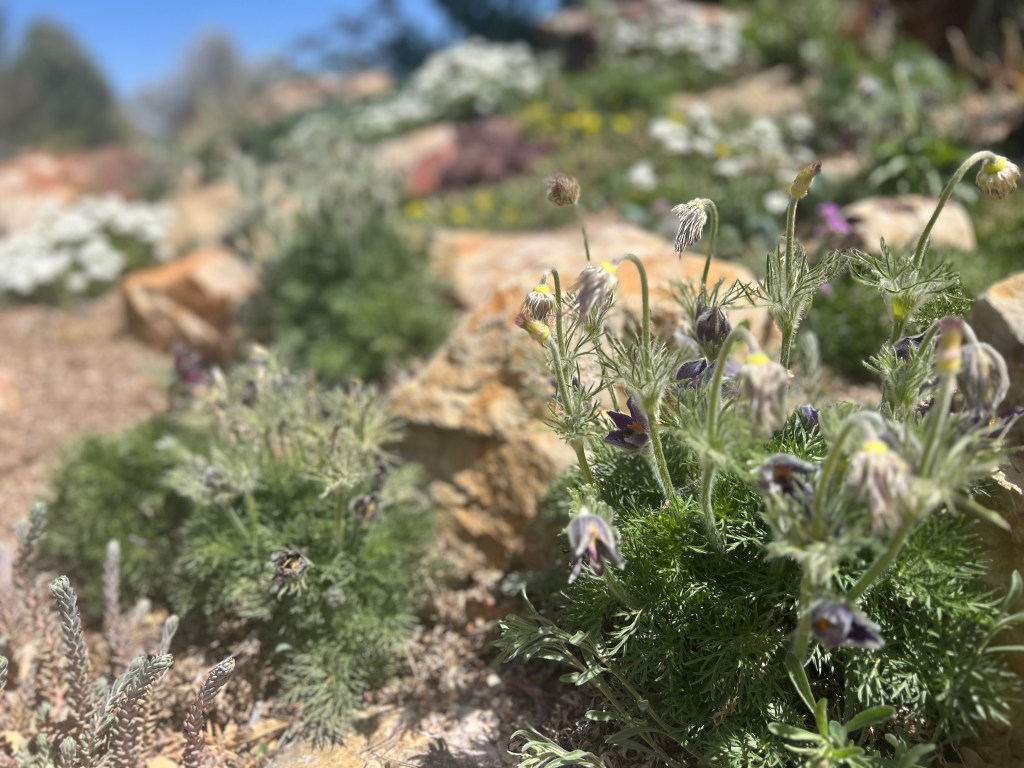
On Sunday, April 19, Colorado State University students were invited to spend a free afternoon at The Gardens on Spring Creek — a 12-acre botanic garden tucked along the Spring Creek Trail, in Fort Collins, Colorado. Although it is less than a mile from campus, it was for many of the students in attendance their first visit.
The event, called CSU Day at the Gardens, was the first of its kind. Organized through a partnership between The Gardens and CSU, it drew students into a space that, despite its proximity, had largely flown under the radar for the university community.
The event was funded by a CSU Community Engaged Learning Mini Grant and organized with direct involvement from students in NR 400 — Public Communication in Natural Resources, a course taught by Dr. Jamie Dahl. The course used the event as a hands-on public communication project, with student volunteers staffing the afternoon and directing visitors throughout the grounds.
Dr. Dahl designed the partnership with intention — to connect students with local biodiversity, build awareness of conservation issues, and offer access to a restorative green space close to campus.
The day’s programming reflected those goals. The event offered a range of opportunities. Students explored the wandered paths lined with bulbs, shrubs, and trees in peak spring bloom. The many cacti, the drought tolerant stars of the curated gardens were show stopping in their flowering.
Alongside the gardens themselves, students browsed a range of informational tables where participating organizations connected them to campus resources, environmental programs and community initiatives.
Students also had access to arts and crafts stations, the Butterfly House, Restorative Fitness sessions, and lunch from the El Diablo food truck.
The Gardens on Spring Creek has served the Fort Collins community through public programming, conservation and education for years. The CSU partnership represents a deliberate effort to bring a younger, student audience into that community — and to position the Gardens as a legitimate wellness and academic resource for the university next door.
That case is increasingly supported by research. A 2025 study in Frontiers in Psychology found that nature-based creative experiences contribute to well-being across emotional, cognitive and social dimensions — a finding that aligns directly with what CSU Day set out to offer.
“We want to make sure students know that they are welcome here — this is a great place to just be and relax, have lunch, or come and study, and our wellness classes offer a great way to get exercise while being in a beautiful nature space.” — Gigi Schaller, Adult Program Coordinator, The Gardens on Spring Creek
Organizers hope the partnership between CSU and The Gardens will continue to grow. For students who attended, discounted memberships offer a straightforward reason to return.
-
Subscribe
Subscribed
Have a WordPress.com account? Log in now.

